-
High Speed Photography

image by Rachel SaraiOne of the things that makes high speed photography most intriguing is that it freezes moments in time that are too fast for the naked eye to see. The trick to high speed photography is a tripod, a narrow aperture, a flash, and lots of patience. -
Night Photography

image by Jon PhillipsThe fun starts when the sun goes down! There is plenty of life to capture after dark. For high-quality night photography, you will need a super-slow shutter speed, and a tripod or solid surface to steady your camera for long exposures. Don’t forget to experiment with the rule of thirds as well, good old composition techniques are still valid here. -
Motion Blur

image by Geraint RowlandMotion blur is the art of capturing a moving subject. This technique is often used in sports photography, but can also be used to create interesting images with light or fast moving objects. To effectively capture motion blur, slow down your shutter speed, and hold your camera still as your subject moves. You can also “pan” with the camera, moving it along to follow the subject before releasing the shutter. This will keep your subject in focus while blurring out the background. -
Black and White Photography

image by Pier-Luc BergeronBlack and white photography, when done effectively – conveys deep emotion or drama. But there’s more to black and white photography than just hitting the black and white filter in Photoshop. Effective B&W photography starts with the composition, making use of shadows, lighting, and strong subjects to create powerful imagery. -
Monochromatic Color Photography

image by AlexMonochromatic color photography captures images in a single hue or color. Much like black and white photography, monochromatic photography has a powerful way of conveying a message without much detail. -
Smoke Art Photography

image by Vanessa Pike-RussellSmoke art photography can be a challenging, yet extremely rewarding technique. Smoke trails create mysterious and captivating images that are intriguing, fascinating, and fun to capture. -
Macro Photography

image by Ramón PortellanoMacro photography is rewarding and unique. It’s exciting to make huge images of subjects that are tiny, capturing minute details that are invisible to the human eye. The best way to make your macro photography stand out is to find subjects that are interesting and detailed. You can accomplish macro photography with just about any camera any lens, though the quality of the resulting images will vary depending on the equipment you use. -
Long Exposure Photography

image by Ben MortimerLong exposure photography can be used to achieve all kinds of interesting results, but it’s particularly popular when it comes to landscapes. A longer exposure effectively blurs movement, resulting in silky smooth water or soft, streaking clouds. -
Forced Perspective Photography

image by Christiaan TriebertForced perspective is a fun, visual play on depth perception – with sometimes hilarious results! When composing a forced perspective image, make sure your main subject is either larger or smaller than everything else. This involves experimenting with interesting angles, and positions for your subjects. Have fun! -
Panoramic Photography

image by Thomas BressonEven if you don’t have an expensive camera, you can capture panoramic photographs through a technique known as “panorama stitching”. This technique involves using a tripod, and taking a series of side-by-side photographs, and merging them together later on. -
Traffic Light Trails

image by peddhapatiTraffic light trails are a popular subject, and a great way to gets started with long exposure photography. To capture light trails, find a high traffic area in an otherwise dark location, set your tripod up, and use a slow shutter speed to blur the motion of the lights. -
Painting with Light

image by Brian TomlinsonSimilar to traffic light trails, painting with light uses a long exposure to create illuminated “trails of light”. This fun technique can be used to create artistic images, or to add a creative spin to a photoshoot. All you need is a dark location, a slow shutter speed, and a source of moving light such as a flashlight or sparkler. -
Silhouettes

image by Sascha KohlmannSilhouette photography is a fun and unique way to create dramatic photos. The best time for silhouettes is sunset or sunrise. To create the silhouette effect, position your subject in front of the sun, and shoot into the sun. A faster shutter speed will result in darker exposure, and a slower shutter speed will create a brighter image. -
Vintage Photography

image by sorenlyA cheap UV filter, and a dab of Vaseline is all you need to create slightly distorted, vintage-style photographs. -
Pinhole Photography

image by Peter ManktelowPinhole photography is actually the foundation of modern photography. A pinhole camera is a simple camera with no lens, and a single small aperture. Light passes in through this single point, and produces images. You can make a pinhole lens for your camera by drilling a small hole in a body cap. Have fun taking beautiful, motion blurred photos. -
Reflection and Mirror Photography

image by SwaminathanReflections can add a powerful sense of depth to a composition. While the most common reflective photographs take place over a body of water, reflections can be effective for many different settings. Try to use a small aperture such as f/11 or higher to help even out the subjects in the shot, enhancing the reflective effect. -
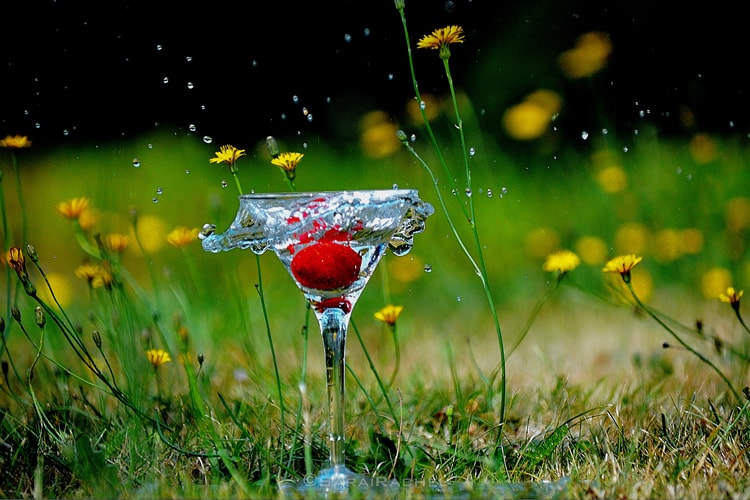
Water Drop Photography

image by CrunchyLensWater drop photography freezes the action of a drop of water, creating interesting and artistic images. With water drop photography, you will want a small aperture, something like f/11 or f/14, to keep the surface of the water in focus. Use a flash, or a fast shutter speed such as 1/160 or faster to freeze the action. -
Zoom Blur Effect

image by Balamurugan NatarajanThe zoom blur effect is a simple way to add some creative looking “fractured-blur” effects to your photographs. To achieve the zoom blur effect, set a slow shutter speed and zoom in or out while releasing the shutter. -
Lens Flare Effects

image by John LodderGetting lens flare into your photographs can be an unhappy accident if it’s unplanned. But learning to manipulate light bursts is a great way to add an interesting bit of flair to your photographs. You can achieve this effect by shooting towards the sun, and using different angles to manipulate the light and create a burst of light around your subjects. -
Kinetic Photography

image by William ChoKinetic photography, also known as “camera toss photography”, is the art of capturing a photograph – while your camera is airborne! While this technique is a bit risky, it can result in some amazing photographs. Ideally, you only want to toss your camera a few inches in the air, and of course, ideally you will want to catch your camera on the way back down!
What is photography? xo
-
the art or practice of taking and processing photographs.
Photography is the science, art, application and practice of creating durable images by recording light or other electromagnetic radiation, either electronically by means of an image sensor, or chemically by means of a light-sensitive material such as photographic film.
Typically, a lens is used to focus the light reflected or emitted from objects into a real image on the light-sensitive surface inside a camera during a timed exposure. With an electronic image sensor, this produces an electrical charge at each pixel, which is electronically processed and stored in a digital image file for subsequent display or processing. The result with photographic emulsion is an invisible latent image, which is later chemically “developed” into a visible image, either negative or positive depending on the purpose of the photographic material and the method of processing. A negative image on film is traditionally used to photographically create a positive image on a paper base, known as a print, either by using an enlarger or by contact printing.
Photography is employed in many fields of science, manufacturing, and business, as well as its more direct uses for art, film and video production, recreational purposes, hobby, and mass communication.
Inspiration to get you started xo
The best digital cameras xo
What’s the best camera? Okay, we admit it – it’s an impossible question to answer. The best camera for a pro photographer is a million miles from the best camera for an adventure sports nut or a novice shooter.
But if you just want to know what we think are the top ten standout cameras you can buy right now – regardless of user level or price point – then keep on reading.
What we’ve done then is to pick out what we think are the standout cameras in their fields. This may be because they have the most amazing features and specifications, because they’re amazing value for what they offer or because they are just brilliant at the job they’ve been designed for.

1. Nikon D850
High resolution meets high speed
Type: DSLR | Sensor size: Full-frame CMOS | Resolution: 45.4MP | Lens: Nikon F mount | Viewfinder: Optical | Screen type: 3.2-inch tilting touchscreen, 2,359,000 dots | Maximum continuous shooting speed: 7fps | Movies: 4K | User level: Intermediate/expert
It may be expensive, but if you’re looking for the best camera money can buy right now, then Nikon’s fabulous D850 DSLR pretty much ticks every box. Packing in a brilliant 45.4MP full-frame sensor, image quality is stunning. But that’s just half the story. Thanks to a sophisticated 153-point AF system and 9fps burst shooting speed, the D850 is just a home shooting action and wildlife as it is landscapes and portraits. The Nikon D850 is perhaps the most well-rounded camera we’ve ever tested.

2. Sony Alpha A7R III
Sony’s megapixel monster gets a performance boost
Type: Mirrorless | Sensor size: Full-frame CMOS | Resolution: 42.2MP | Lens: Sony E mount | Viewfinder: EVF | Screen type: 3.0-inch tilting touchscreen, 1440,000 dots | Maximum continuous shooting speed: 10fps | Movies: 4K | User level: Expert
Once, if you wanted a professional quality full frame camera it had to be a Nikon or Canon DSLR. Sony’s growing range of mirrorless full-frame cameras offer a great alternative. With the Alpha A7R III, Sony has taken one of our favorite mirrorless cameras and bolstered the performance to make it one of the most complete and versatile cameras available today. With a brilliant full-frame 42.2MP sensor that’s supported by and advanced AF system and 10fps burst shooting, you no longer have to sacrifice performance for resolution or vice versa.

3. Fujifilm X-T2
A stunning camera perfect for enthusiast photographers
Type: Mirrorless | Sensor size: APS-C CMOS | Resolution: 24.3MP | Lens: Fujifilm X mount | Viewfinder: EVF | Screen type: 3.0-inch tilting screen, 1,040,000 dots | Maximum continuous shooting speed: 8fps | Movies: 4K | User level: Intermediate/expert
The update to the X-T1 may look similar at first glance, but there have been some huge improvements made to Fujifilm’s follow-up flagship mirrorless camera. Perhaps the biggest update though is the autofocus. A huge leap forward compared with the system found in the X-T1, AF tracking of moving subjects is very snappy, while the level of sophistication and customisation is impressive. Add in 8 frames per second burst shooting, a clever double-hinged rear display, bright EVF, Fujifilm’s excellent 24.3MP X Trans III CMOS sensor and plenty of body mounted controls and you’re left with one of the best cameras available today.
4. Nikon D3400
Not the most expensive entry-level DSLR, but we think it’s the best
Type: DSLR | Sensor: APS-C CMOS | Resolution: 24.2MP | Lens: Nikon F mount (DX) | Viewfinder: Optical | Screen type: 3.0-inch screen, 921,000 dots | Maximum continuous shooting speed: 5fps | Movies: 1080p | User level: Beginner
Nikon’s D3400 builds on the brilliant D3300 and is our top pick when it comes to entry-level DSLRs. Sharing pretty much the same design and specification as its predecessor, the D3400 adds Nikon’s SnapBridge bluetooth connectivity to transfer images directly to your smart device to make it that much easier to share images. The 24.2MP sensor resolves bags of detail, while the D3400 is also a very easy camera to live with. Its clever Guide Mode is a useful learning tool that gives real-time explanations of important features. There’s no touchscreen, but otherwise, this is our favorite entry-level DSLR right now.

5. Fujifilm X100F
Classic design and controls make it the perfect enthusiast compact
Type: High-end compact | Sensor: APS-C CMOS | Resolution: 24.3MP | Lens: 23mm f/2 | Screen type: 3-inch, 1,040,000 dots | Viewfinder: Hybrid | Maximum continuous shooting speed: 8fps | Movies: 1080p | User level: Expert
The X100F is a thing of beauty both to look and and to use, but it’s not for everyone. It’s a relatively large, retro-styled compact camera with a fixed focal length 35mm equivalent f/2.0 lens, and designed for photographers who hanker after the weighty feel and manual external controls of traditional 35mm film rangefinder cameras. It’s a relatively specialised camera and most owners are likely to have other cameras too. It may be a touch pricey, but there’s nothing quite like it – it’s an exquisite camera to look at and to shoot with.

6. Olympus OM-D E-M10 Mark III
Top-notch performance in a super-small package
Type: Mirrorless | Sensor size: Micro Four Thirds | Resolution: 16.1MP | Lens: Micro Four Thirds | Screen type: 3.0-inch tilting touchscreen, 1,370,000 dots | Viewfinder: EVF | Maximum continuous shooting rate: 8.6fps | Movies: 4K | User level: Beginner/enthusiast
While the main specification of the OM-D E-M10 Mark III doesn’t offer a huge upgrade from the Mark II, Olympus has refined and tweaked one of our favorite mirrorless cameras to make it an even more tempting proposition for new users and enthusiasts alike. Some will criticise the smaller Micro Four Thirds sensor format (roughly half the area of APS-C) but the effect on image quality is minor and it means that the lenses are as compact and lightweight as the camera itself. Sporting a 5-axis image stabilization system, decent electronic viewfinder, an impressive 8.6fps burst shooting speed and 4K video, it’s no toy – the E-M10 Mark III is a properly powerful camera.

7. Panasonic Lumix ZS100 / TZ100
The perfect travel camera – small, versatile and with a decent zoom
Type: Travel compact | Sensor: 1-inch type CMOS | Resolution: 20.1MP | Lens: 25-250mm, f/2.8-5.9 | Viewfinder: EVF | Screen type: 3.0-inch touchscreen, 1,040,000 dots | Maximum continuous shooting speed: 10fps | Movies: 4K | User level: Beginner/enthusiast
Similar in size to earlier ZS/TZ-series cameras, Panasonic however has managed to squeeze a much larger sensor into the ZS100 (TZ100 outside the US). This enables the pixels to be about 2.4x bigger than they are in models like the Lumix ZS70 / TZ90, and this helps the ZS100 produce much higher quality images. The zoom lens isn’t quite so extensive though, but you still get an electronic viewfinder that makes it easier to compose images in bright sunny conditions and in addition to 4K video recording, there’s Panasonic’s 4K Photo mode to help capture 8MP images of fleeting moments. It all adds up to be a powerful compact camera.

8. Canon EOS Rebel T7i / 800D
Canon’s best entry-level DSLR yet offers power and performance
Type: DSLR | Sensor: APS-C CMOS | Resolution: 24.2MP | Lens: Canon EF-S | Viewfinder: Optical | Monitor: 3.0-inch vari-angle touchscreen, 1,040,000 dots | Maximum continuous shooting speed: 6fps | Movies: 1080p | User level: Beginner
One of the best entry-level DSLRs out there, the EOS Rebel T7i (known as the EOS 800D outside) is an update to the EOS Rebel T6i / 750D. The resolution stays the same, but it’s a new design with an improved high ISO performance. The autofocus also gets a boost over the older model, now with a 45-point arrangement that’s backed up by excellent live view AF system that’s as quick as mirrorless rivals, while the newly designed graphical interface will certainly make this camera even more appealing to new users. The absence of 4K video and the quality of the exterior materials disappoint, but despite this the EOS Rebel T7i / 800D is a great entry into the world of DSLR photography.

9. Panasonic Lumix FZ2000 / FZ2500
The bridge camera for the photographer who wants quality too
Type: Bridge camera | Sensor: 1.0-inch type CMOS | Resolution: 20.1MP | Lens: 24-480mm, f/2.8-4.5 | Screen type: 3-inch vari-angle screen, 1,040,000 dots | Viewfinder: EVF | Maximum continuous shooting speed: 12fps | Movies: 4K | User level: Intermediate/expert
Our final camera is a ‘bridge’ camera, a type of camera that we don’t normally like very much because the ultra-zoom design forces the makers to use titchy 1/2.3-inch sensors the same size as those in point-and-shoot cameras. You get the look and feel of a DSLR, but you certainly don’t get the image quality. But the Panasonic Lumix FZ2000 (known as the FZ2500 in the US) is different. It sacrifices a huge zoom range in favour of a much larger 1.0-inch sensor – a compromise most serious photographers will applaud. While the zoom tops out at 480mm equivalent, which is relatively short for a bridge camera, that’s still plenty for all but the most extreme everyday use. We’d certainly sacrifice a little for of zoom range for better and faster optics. We love the FZ2000 because it delivers both image quality and zoom range, while also offering full manual and semi-manual controls, the ability to shoot raw files and 4K video.

10. GoPro Hero6 Black
Meet the new king of action cameras
Type: Action camera | Sensor: 1/2.3-inch type CMOS | Resolution: 12MP | Lens: wide-angle f/2.8 lens | Screen type: 2-inch touchscreen | Viewfinder: N/A | Movies: 4K | User level: Beginner/intermediate
The GoPro Hero6 Black is the best action camera you can buy. It’s pricey compared to some of the competition, but it’s got a wealth of features, including shooting 4K footage at up to 60fps, as well as super-slow-motion 1080p video at 240fps. The improved image stabilization system works at treat, as well as footage offering a wider dynamic range and better low-light performance compared to the Hero5 Black. That’s not forgetting it’s waterproof down to 10m, has a useful 2-inch touchscreen, while the updated app with QuikStories automatically transfers and edits your footage for you. If you want an action camera, you’re not going to go wrong with the Hero6 Black.
https://www.techradar.com/news/photography-video-capture/cameras/best-camera-1271079
Why photography is a great hobby xo
Welcome to my second page! xo
Photography allows you to create images of events, times, and places. To both record what happened and allow you to share them with friends and family, either in digital format or more permanently with prints or photo books. By being able to capture a special moment in time, you carry the memory of that event forward with you, allowing you to share it and remember it with those that were there. Those memories become part of your history, perhaps family lore, not just stories passed down through the generations – but images as well. As the popular idiom says, “A picture is worth a thousand words”.
So much fun can be had with a camera. You could be out with the family at the beach or a picnic, local sports games, randomly roaming your city streets photographing strangers without them noticing, stalking wildlife, hiking up a mountain for a stunning view, or standing under the stars at 2 a.m. watching the Milky Way slowly move across the heavens. So many opportunities to do new, interesting, and fun things with your camera that you likely may not have otherwise done.
All sorts of things become interesting when they can provide you with material for photographic adventures. Cultural festivals, parades, sports events, a wander along the beach, exploring parts of your city previously undiscovered, architectural details on buildings, intricate details of flowers, people watching, difficulties of photographing wildlife, meeting people who have different interests and hobbies – just for a few ideas. Most people are willing to share their passion with you if you take some time to talk to them. There are endless opportunities for photographic inspiration – even the contents of your fridge or pantry can be fascinating when viewed through a macro lens. All you need to do is make an effort to look.

Research has shown that learning a new skill helps the brain and improves memory, and the more difficult the skill, the more improvement you get. Coupled with exercise, these two things are considered important for long-term brain health and neuroplasticity. Studies show that slower learning over time helps build strong new linkages within the brain.
New knowledge will accumulate over time, as you keep putting effort into learning a new skill. Given that photography has so many elements, the science of light, the technology of the camera and the creative artistic side, there is a lot to learn. So whatever your age, now is the perfect time to start learning photography.
Getting out of the house, walking about, or even hiking is often a side-effect of getting into photography. If you are into landscapes then you have to go to where the landscape scenes are, and that often means some form of exercise. Once you have enough camera gear – likely a body, some lenses, and a tripod – it can weigh a reasonable amount and you will need a bag of some kind to carry it comfortably if you are traveling any reasonable distance.
Some people prefer a more gentle form of exercise – for health or mobility reasons. Others may prefer multi-day hikes into stunning mountain scenery. Mountain biking, horseback riding, kayaking and similar sports are often popular modes of transport to get you to a new landscape and allow for photography along the way.

Camera gear is heavy, so it’s important to be aware of any health or safety concerns. Carrying heavy cameras on straps around your neck for a long time can be quite painful. People with disabilities or limited mobility might prefer a lighter weight option and there are many available these days. Although one of the downsides of digital photography, especially if you shoot RAW, is the amount of time you can spend in front of your computer, processing the images, so that needs to be considered into your fitness regime as well.
In her book, “Big Magic: Creative Living Beyond Fear”, Elizabeth Gilbert writes a great deal about creativity and inspiration. She says it is good for us as individuals, and that the world is a better place for having art in it. That feeling when you finally get the awesome sunrise photo or the perfect candid, maybe the aurora or a meteor shower, or whatever your passion is, that feeling when you finally get the image, makes it all worthwhile.
Being creative is something we don’t tend to allow ourselves to do as adults. Photography is a very acceptable form of creativity that allows endless flexibility in how you adapt it to your own personal style. That style can grow as you learn more and start to experiment with different things. Creativity is fun and it provides a necessary balance against the stressful demands of the modern lifestyle.
Traveling to different parts of your own city or country, and if you are lucky enough to afford it, other parts of the world is a likely outcome of taking up photography. There is so much interesting stuff to photograph in other places including landscapes, wildlife, architecture, and people from other cultures. Travel broadens the mind and exposes you to new concepts and ideas and is an excellent learning opportunity, provides so much creative

Travel broadens the mind and exposes you to new concepts and ideas and is an excellent learning opportunity. It provides so much creative variety and possibilities for personal growth. Taking the opportunity to travel, even just a couple of hours drive or bus ride away, can provide entirely new situations and vistas. Be brave and venture forth.
Meeting interesting new people in your travel and adventures is often an unintended side effect. Asking the locals for advice on how to find the way to a certain viewpoint may lead to them showing you the way. Chance encounters with people curious as to what you might be photographing can lead to directions to other points of interest. Maybe you organize a meetup with local photo enthusiasts in your area and you make a new friend, a new adventure buddy. A random chat in a cafe might lead to a new client.
If you are friendly and courteous with your camera, many people are often happy to pose. In some cultures, it may be appropriate to thank them with a small cash payment, so research that in advance. Engaging with other people, even with the barriers of language, means you make more of a connection, and the resulting images may be much more powerful and emotional. While keeping personal safety in mind, be brave and say hello.

Being part of the photography community can be very supportive. Sharing your passion with other people around the world, who speak your language, understand your challenges, and have had similar experiences can very helpful. Online forums can be good places to find those secret local waterfall spots, where certain rare birds might be nesting or come to feed. People may be willing to offer assistance with problems, critique on your images, and it’s just generally a welcoming place to hang out and chat about your hobby.
There are many different types and styles of photography. Some people prefer to label things, put them into boxes and tell you that you have to fit within their preconceived ideas. Rubbish! One of the great joys of photography is its ability to be adapted to every individual’s desires, needs, or preferred style. There is space for all different approaches within photography from the classic landscape, nature, wildlife, street, portrait, sports styles to all the different variations in between.
Whatever your passion is, you can explore it via photography in whatever creative way you want. When starting out it pays to have an understanding of the basic guidelines for composition, but don’t let them limit you to always stay inside them. Challenge them, break them, and see what happens. It might work, it might not, but either way, it will be a learning experience.
Whatever light you have at any given moment is the light you need to work with. Modification of the light might be required – it may need filtering, shaping or diffusing. You might need special gear to adapt to certain light conditions, e.g. astrophotography has certain types of lenses that are recommended, fast glass is recommended for situations where light levels will be poor – sports events inside gyms, music and stage events, churches for weddings, etc.
digital-photography-school.com/10-reasons-photography-great-hobby
Things you should know before starting photography xo
When you start approaching photography seriously, you may never see things the same way again. If your experience with examining things critically is like mine, you’ll suddenly become a student of every photo and video you consume. I can hardly watch a movie anymore without analyzing the cinematography and the way that shots are setup. Cinema is a unique medium, but I still draw so much inspiration from how those expert shots are put together.
Once you start chasing great images, you can count on changing your lifestyle. Waking up early or staying out late to find unique lighting becomes a routine part of life. You might catch yourself analysing photos for how they’re lit and imagining how to recreate them. Personally, I believe that this process of reverse engineering great photographs is a powerful way of growing your own work. Jumping into photography headfirst brings the right side of the brain alive.
Photography is an expensive hobby, particularly when you prioritise buying gear. After buying your first SLR camera, you’ve committed yourself to buying into a “system” of lenses and flashes that work only within the walls of your own brand. After that commitment, it can be costly to sell off your entire kit and migrate to another system (I’ve pulled this costly maneuver enough times to know).
When I first started learning about exposure, one mistake that I struggled with was trying to learn the exposure scale mathematically. Measuring the stops of light and memorising the f-stop scale, counting geometrically, and all that stuff is a massive waste of time, at least at the beginning.
More important is learning how the exposure triangle—aperture, shutter speed, sensitivity—relates, and how to balance and approach exposure creatively. Don’t get too worried about counting stops and perfectly balancing light, when there’s so much more that’s more important to learn, like how to pose people, how to see good lighting, or how to find photographic moments.

The sooner you begin to truly control your exposure, the sooner you’ll become more than a camera button pusher. This isn’t always easy—it requires learning plenty about metering, exposure, focus and more.
Venturing outside of the automatic exposure mode is the single largest step you’ll take to transition from camera button pusher to artist. When you begin to control the photo and can handle the nuances of exposure, you are turning the exposure process upside down and envisioning an outcome for the photo. You can learn to handle back lighting, creative exposure, and many more scenarios than the camera can handle on its own.
It seems awfully basic, but I often found myself forgetting that the only way to truly improve is to keep your camera in the hand everyday, constantly making images. If there’s one way that I continue to fall short, it’s blocking off time between school and work to make images.
One of the best ways to keep making photos is to challenge yourself. When I have an assignment, even if it is self-assigned, I’m more likely to get out and shoot. There are tons of shooting challenges across the web that will keep you creatively challenged. If you thrive off structure like I do, challenges and assignments are ways to keep the creative juices flowing.
One key to avoiding spending too much money on photography gear is to buy smart and get the purchase right the first time. Looking back, the first two years of my photography hobby were spent leapfrogging from one camera body to the next. I was in search of megapixels, more autofocus points, and anything that I thought could improve the outcome of my photographic work. In the process, I always had a way of avoiding what I should actually upgrade: lenses!

As long as you are married to the inexpensive kits lens that comes with the camera, you’re going to limit your work. Although it’s totally possible to make great photos with the kit lens, it has its limitations; typically it’s an 18-55mm lens with a slow aperture. That slow aperture limits you to well-lit environments. As you stop down the lens to f/8 or thereabouts, it can be very sharp, but can still be lacking.
This tip might seem to contradict constantly acquiring more gear to make better photos, but there is some truth in upgrading the glass in front of your camera. It’s more important to make the right upgrade by choosing faster (larger aperture) lenses that give you great value in terms of photographic output.
After you’ve been shooting for awhile and have started to showcase your work, chances are that you’ll be approached with some shooting offers. Whether it’s a friend’s senior portraits, some landscape photos commissioned for print, or weddings (the most dangerous engagement of all), friends always seem to be looking for someone (usually on the cheap) to capture their precious moments.
Sure, it’s attractive to suddenly monetise your hobby. It can help you to get more gear and also help make ends meet. However, it brings with it some nuances that are hard to measure. Dealing with difficult clients who cancel at the last moment, risking legal liability and much more are all parts of the professional process. No matter your relationship with the client, you’re always putting yourself on the line when you accept money for your services. Slow down on going professional and remember to tread lightly.
You’ll never make a good photo with your camera sitting at home. I’ve had to convince myself that the day that I leave the camera at home will be the day I miss the award winning photojournalism opportunity I’m waiting for. Therefore, you’ll rarely catch me without an image making tool. Whether you have an SLR or an iPhone with your favourite imaging app, make sure you keep a tool with you that you can make images with!

Furthermore, this “always be carrying” philosophy has greatly shaped my recent gear choices. I won’t buy another large camera that will live in the bag, because I know that no matter how superior the quality, if it won’t get used, it’s no good to me.
If your current camera is an interchangeable lens type, I can’t think of a better “second” lens than the 50mm. With its fast aperture, typically f/2, f/1.8, f/1.4, or it can help you to tackle low light situations and also help you to control depth of field in a way that the kit lens never can. If you’re using an smaller, APS-C sized sensor, a 35mm lens will create roughly the same field of view as a 50mm lens on a full-framed camera.
For me, the greatest creative control is the ability to control depth of field. If you aren’t familiar with the term, it refers to how much of the photo is in focus. Wide aperture lenses like the 50mm f/1.8 allow us to limit the sharp portion of the photo to a small portion that lets you isolate a focal point.
One way to improve your shooting is to understand the tools at your disposal. When you don’t have to think about the buttons to push and the technical choices to make, you’re free to approach photography as a creative. You’re thinking in terms of light, not spinning the dials that control aperture. When you really learn every option, every setting, every control of your camera, your camera becomes an extension of your eye.
It seems unthinkable, but spending some quality reading time with the camera’s manual is one way to get acquainted. An even better way is to shoot it every day and dig deeper and deeper in the settings.
photography.tutsplus.com/…/10-things-i-wish-i-knew-when-starting-photography–photo-11433
It’s all about angles and lighting and then you’re ready to start 🙂